DUTCH FLAT

|
DUTCH FLAT |
|
|
|
|
NAME: Dutch
Flat COUNTY: Placer ROADS: 2WD GRID #(see map): 1 CLIMATE: Mild winter and summer BEST TIME TO VISIT: Anytime. |
COMMENTS: Semi-ghost REMAINS: Many original buildings. |
| Dutch Flat was 1st settled in 1851 by a
group of German miners, and the town was granted a post office in 1856.
Thousands of miners worked the ridges, and the entire region is deeply
torn by hydralic mining, which was essentially water blasting with huge
cannons known as "monitors". Besides it's prominence as a mining center,
it was also a stage station, making it one of the largest, and most important
towns in the county from about 1864 to 1866. In the fall of 1866, after
the railroad had reached Cisco, 20 miles farther up the ridge, Dutch Flat
lost much of it's importance as a stage stop. During the 1870's, hydra-mining
operations at Dutch Flat reached their peak. In 1872, the Cedar Creek
Company of London purchased as many as 32 claims, and worked them on a
gigantic scale. Millions in gold were taken from the placers, with one
nugget alone being worth $5000. With the price of gold in those days valued
at about $17 to $20 per ounce, one has an idea of it's enormity. Adjoining
the pioneer American cemetery just above the town, is the Chinese burial
grounds, half hidden among the pines. Most, or all or the bodies have
long been removed from their graves, and taken back to China. The old
site of Dutch Flat Chinatown, which once had a population of about 1000,
was near the railroad tracks, 1 mile above the main townsite. Submitted
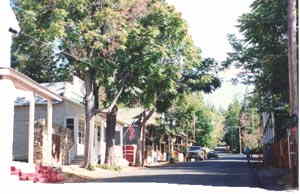
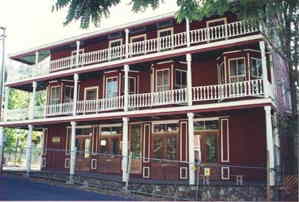
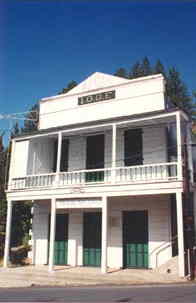
by Bob Stelow. With respect to your page on the town of Dutch Flat: DF had two The second Chinatown had as many as 800 residents at one time, and, in the special Geary Act census of 1893, over 350 Chinese were still there, with a dozen or more rammed-earth stores, and forty or fifty wood-frame buildings, and a headquarters building for the Chee Kong tong. - Russell Towle The picturesque town is located a short distance of highway 80. It was named after two Germans who settled here in 1851. The town has been preserved against the ravages of fire, storm and commercialism that have spoiled other Mother Lode gems. Among the oldest buildings are the Odd Fellows Hall, Masonic Temple, the Dutch Flat Hotel, Methodist Church and the Dutch Flat Trading Post and Store all of the 1850s. Submitted by Henry Chenoweth.
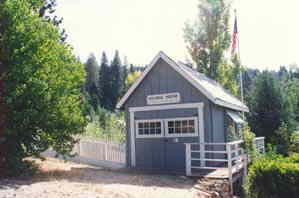
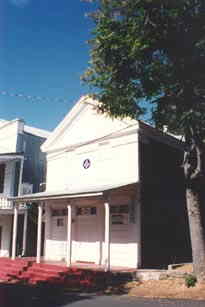 Masonic Lodge-- first story was built as a store Courtesy Dolores Steele 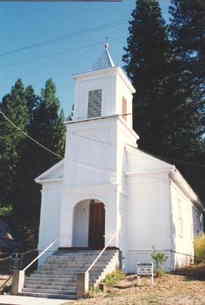 Dutch Flat Methodist Church built in 1850 Courtesy Dolores Steele 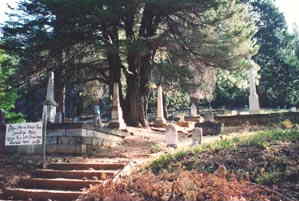 Dutch Flat Cemetery Courtesy Dolores Steele 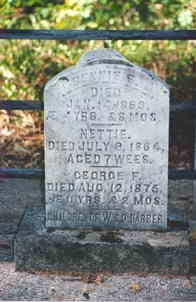 Dutch Flat Courtesy Dolores Steele |
|
|---|
|
|